Facebook
 X
 Pinterest
 Copy Link
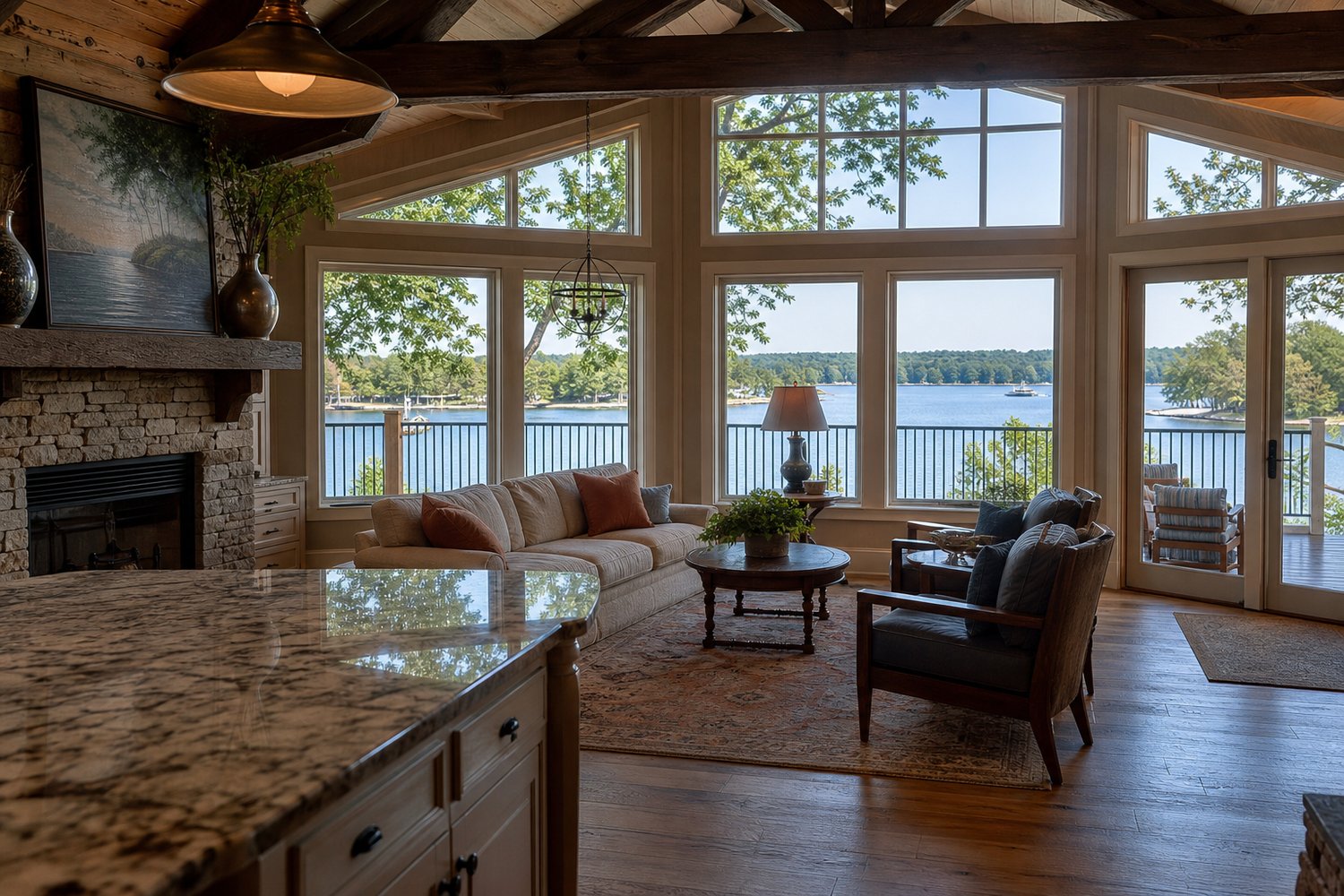
Start with what you can’t renovate. Walk the lot to see how much of it you’d really use, confirm how you reach the water and what rights come with the dock, then test the floor plan against daily life. Paint, flooring, and kitchens can all change later. Those three things mostly can’t.
What should you check before buying a lake home near Knoxville?
Before you buy a lake home near Knoxville, check the features you can’t change later: how much of the lot is truly usable, how you get to the water (and what dock and shoreline rights come with the property), and whether the floor plan works for everyday living. Finishes can be updated after closing. Slope, access, and layout generally can’t.
Key Takeaways
- Lot size on paper tells you little; the usable, level, buildable portion of a lakefront lot is what decides how you’ll live there.
- Water views and actual water access are two different things, so confirm how you physically get from the house to the lake.
- Dock, boat lift, and shoreline rules vary by lake and by property, so verify what is permitted and what transfers to you before you write an offer.
- Slope, setbacks, driveway, and layout are hard to change; cabinets, flooring, and paint are not.
- Flood-insurance and septic questions depend on the individual property, so get answers during your due diligence period, not after closing.
Every buyer who calls me about a lake home near Knoxville starts with the same picture: sunset, deck, water. I love that picture too. But in my experience the buyers who are happiest a few years later are the ones who looked past it and asked harder questions about the lot, the access, and the floor plan. Here’s how I walk my clients through it.
How much of a lake home lot is actually usable?
Often far less than the acreage or the listing photos suggest. A lakefront lot can be steep, partly low-lying, or limited by setbacks, and any of those shrinks the space you can actually enjoy.
I tell buyers not to let beautiful finishes distract them from what they can’t easily change: location, lot, and layout. A remodeled kitchen is a pleasant surprise. A steep yard is a permanent condition.
Walk the lot, not just the house
Plan to spend real time outside on your showing. Look for:
- Slope. How steep is the walk from the back door to the water? Picture it with groceries, with guests, and in wet weather.
- Level space. Is there a flat area for a fire pit, a lawn, or outdoor seating, or is everything angled?
- Distance to the shoreline. Some homes sit close to the water and some sit high above it. Both have trade-offs.
- Drainage. Look for erosion, pooling, retaining walls, and any signs of water moving where it shouldn’t.
- Room to add things. If you want a pool, a garage, or a detached structure, ask whether the lot and local rules would realistically allow it.
Your specific answers depend on the property and on the local requirements that apply to it. This is exactly the kind of question I look into with my buyers before we get serious about an offer.
Ask about flood and sewer status early
Whether a home sits in a mapped flood area, and what insurance would involve, depends on the individual property. You can start with the FEMA flood map resources and then ask your insurance agent about the specific address. Also find out whether the home is on public sewer or a septic system. A septic system affects maintenance, and it can affect what you’re able to add later.
How do you check water access, docks, and lake levels?
Confirm in writing how you reach the water, who owns or controls that access, and what dock or shoreline improvements are allowed. Many East Tennessee lakes are reservoirs with their own shoreline rules, so what a seller did on one property doesn’t guarantee you can do the same on another.
Questions to settle before you fall for a dock
- Is the water access direct, shared, or only a view? A home near a lake is not the same as a home on it.
- Does the dock come with permission to keep it? Ask what approvals exist, whether they transfer, and have your agent help you verify with the managing authority for that lake.
- What is the condition of the dock, seawall, or shoreline? These are expensive to repair, and they’re worth having a specialist look at.
- How do water levels change through the year? Depending on the lake, the shoreline you see at showing may look different at another time of year. Ask neighbors, ask the listing agent, and look at the lake in more than one condition if you can.
- Is the cove deep enough for how you plan to use it? A quiet cove is lovely, but it may not suit the boat you own or want.
If you’re weighing different parts of the area, my post on waterfront living in East Tennessee covers how the communities differ, and the one on buying a second home on the water is useful if this will be a weekend place.
Check the road and driveway too
Access isn’t only about the water. Look at the approach to the property. Is the road paved and maintained, and who is responsible for it? Is the driveway steep or narrow? Can you tow a boat trailer in and turn around? Those details matter every single time you come home.
Does the layout of a lake home work for everyday life?
Only if the rooms, levels, and storage fit how you’d really live there, not just how you’d spend a perfect Saturday. A layout that photographs well can still be frustrating on an ordinary Tuesday.
Test the floor plan against your routine
- Where do the best views fall? Make sure you’d use the rooms that face the water, not just admire them.
- How many levels are there? Lake homes on sloped lots often stack living space on several floors. Count the stairs between the kitchen, the bedrooms, and the water.
- Where does the wet gear go? Look for a mudroom, a lower-level entry, a bath near the exit, and storage for life jackets, towels, and tubes.
- Is there a main-level bedroom? If you might stay long term, that’s hard to add later.
- Is the home set up for guests? Lake houses tend to fill up, so consider sleeping space and bathroom count.
Separate what’s fixable from what isn’t
This is the comparison I use to keep buyers grounded while they tour:
| Feature | Easy to change later? | Why it matters at the lake |
|---|---|---|
| Paint, flooring, light fixtures | Yes | Cosmetic updates rarely change how the property lives. |
| Kitchen and bath finishes | Yes, with cost and planning | Worth pricing out, but not worth overpaying for in the wrong home. |
| Slope and usable yard | Rarely | Drives how much of the property you’ll really use. |
| Distance and path to the water | No | Shapes daily enjoyment and long-term mobility. |
| Dock and shoreline rights | Depends on the rules for that lake | Must be verified before you commit. |
| Floor plan and number of levels | Only through major work | Determines comfort for daily living and for guests. |
What should you do before making an offer on a lake home?
Line up your financing first, then use your inspection and due diligence period to verify the lot, the water access, and the systems, and compare offers on terms, not only price. Lake homes can take extra work to evaluate, so you want your questions answered while you still have room to negotiate.
Build a short due diligence list
- Order a standard home inspection and ask whether specialists should look at the foundation, retaining walls, dock, or septic system.
- Ask your insurance agent about coverage for the specific address, including anything related to flood exposure.
- Review any HOA or community documents for rules on docks, rentals, boats, and shared amenities.
- Confirm dock and shoreline permissions for that property rather than assuming they carry over.
- Visit more than once, at different times of day and, if possible, in different conditions.
Not everything on an inspection needs to be negotiated. Focus on what really matters: structure, water intrusion, systems, and anything tied to the shoreline. For more on weighing the offer itself, see my post on evaluating offers beyond price in Knoxville.
If you’re selling a home to buy on the water
Many lake buyers are moving from a current home, and the timing takes planning. If that’s you, my post on buying and selling at the same time in Knoxville walks through how I approach it. Every situation is different, and the best way to find out what works is to talk it through with someone who knows this market.
My job isn’t to talk you into a lake home. It’s to help you decide whether this lot, this access, and this layout are right for you. If you’re thinking about a lake home near Knoxville, even if you’re still months from buying, I’d rather start the conversation early. Let’s talk about your next move.
If you’d like to see how my clients describe working with me, you can read my reviews on Google and Zillow.
FAQ
What should I look at first when touring a lake home in Tennessee?
Start outside with the lot and the path to the water, then go inside. Slope, usable yard, and how you reach the shoreline are the hardest things to change, so they deserve your attention before the kitchen or the finishes do.
Does a lake home near Knoxville need flood insurance?
It depends on the specific property. Flood exposure and insurance requirements vary by address and by lender, so ask your insurance agent and your lender early, and check the property against the FEMA flood maps while you’re still in your due diligence period.
Can I add or keep a dock on a lake home?
Not automatically. Many East Tennessee lakes have shoreline and dock rules, and an existing dock doesn’t guarantee permission transfers to a new owner. Verify what is allowed for that property before you rely on it in your offer.
Is a lake home harder to buy than a regular home?
It involves more questions, but it isn’t harder when you prepare. You’ll want to review access, shoreline rules, insurance, and systems like septic, in addition to the usual inspection and financing steps. A title company handles the closing the same way it does for any Tennessee purchase.
Equal Housing Opportunity. Caroline Badgett, Affiliate Broker with Wallace Real Estate, regulated by the Tennessee Real Estate Commission (TREC). This article is general information, not legal, tax, or financial advice; confirm your own numbers and requirements with your title company, tax advisor, or lender.